Clutch and transmission symptoms
If the truck will not shift, slips out of gear, or loses drive, the fault may sit in the clutch, the transmission, or the controls that link them. Recognizing the symptom is the first step toward a diagnosis.
Difficulty shifting
Gears that grind, refuse to engage, or fight the shift lever may point to clutch engagement problems, linkage or actuator issues, or a fault inside the transmission itself.
Slipping and loss of drive
Engine revs that climb without matching road speed, or a truck that drops out of gear under load, can come from worn clutch components, low or degraded fluid, or transmission faults.
Unusual noises
Whining, clunking, or rattling that changes with gear or speed may indicate worn bearings, gears, or driveline components. Note when the noise appears—it helps the technician narrow the search.
What this does and does not tell you
These are common signs, not a diagnosis. The same symptom can have several causes, and only a hands-on check of the truck confirms which one applies. If the truck is down, note what you see and hear, then call for roadside diagnostics.
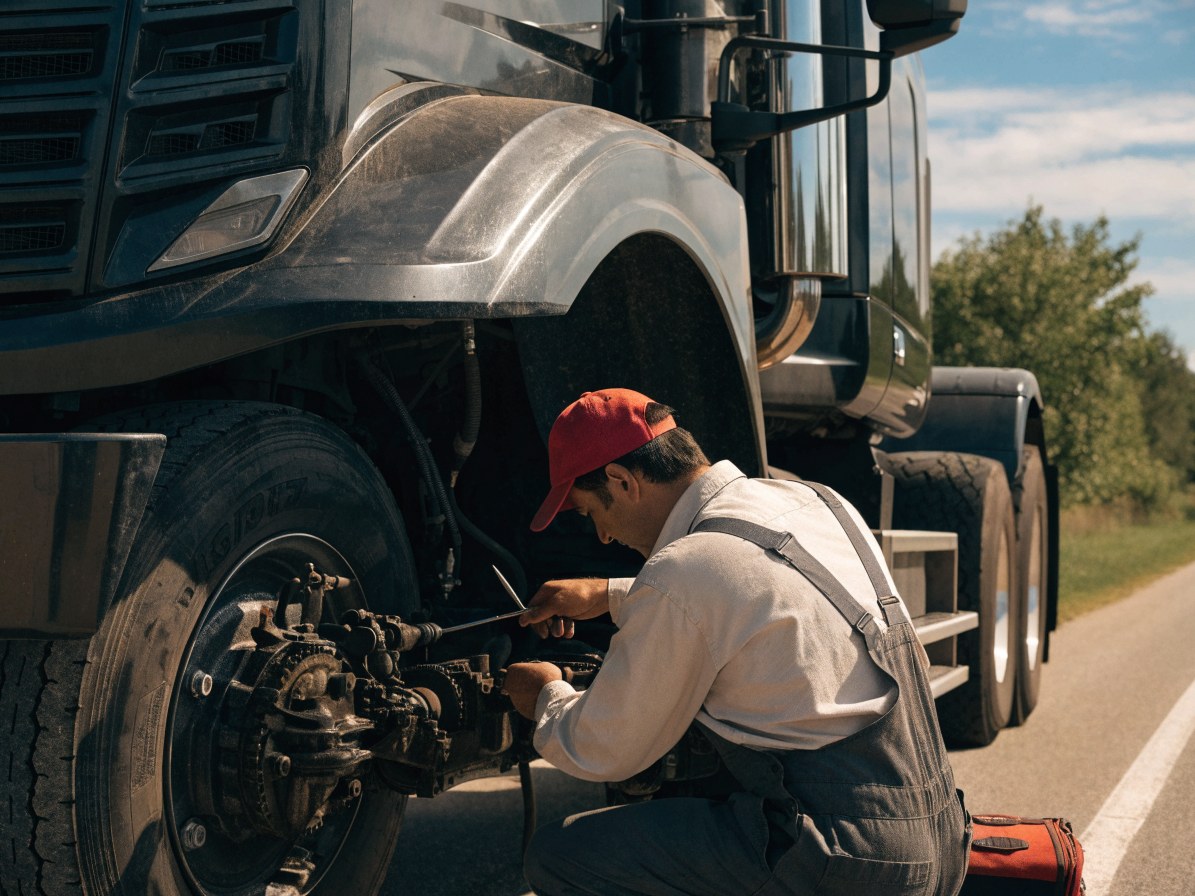
How a clutch or transmission call gets diagnosed
When a semi-truck will not shift, slips out of gear, or loses drive on the shoulder, the first step is a clear account of what happened — then a check of what the technician can reach on site.
Mobile heavy-duty diagnostics · Mount Airy, NC · 24/7
What we ask you first
Before any tool comes out, we talk through the symptoms with you: when the problem started, what it feels like at the shifter, whether it happens cold or hot, under load or empty, and any warning messages the cluster has shown. That account narrows the search faster than any single check.
What gets checked on site
Where the truck allows it, we inspect the components accessible from the roadside and read fault information where the truck provides it. Typical checks include:
- Linkage and shifter feel, including free play and engagement points
- Visible leaks around the transmission, actuator and clutch housing
- Fault codes and stored data from the truck's diagnostics, where available
- Air supply and actuator operation on air-shifted units
- Fluid level and condition where it can be checked safely on site
From checks to repair options
The goal of the roadside visit is an informed picture: what we can confirm where the truck stands, what the symptoms point toward, and which repair options are realistic in the current conditions. From there you get a straight explanation of what can be attempted on site and what may need a shop — not a guess dressed up as a diagnosis.
Roadside repair options
What a mobile technician may be able to address on the shoulder for a clutch or transmission fault — the available work depends on the fault and roadside conditions, and not every repair can be completed roadside.

Transmissions, clutches & actuators
On-site diagnostics for shifting faults, clutch engagement problems, and actuator issues on heavy-duty semi-trucks.

Differentials & driveline diagnostics
Related diagnostics when loss of drive points past the transmission to the differential or driveline.

Fault code & sensor checks
Reading available fault information and checking accessible sensors to narrow down the cause before repair options are discussed.

Fluid & linkage checks
Checking fluid condition and linkage adjustment where accessible, since fluid or linkage issues are common causes of shifting trouble.

Roadside adjustments & repairs
Where the fault and conditions allow, adjustments and component work completed on-site to get you moving again.

Findings & next-step guidance
A clear account of what was found and which repair options apply, including when the fault may need a shop.
When a clutch or transmission repair may need a shop
Some faults, parts, equipment or roadside conditions make safe on-site completion impractical. Where that is the case, the next step is to discuss the findings and repair options with the technician.
| Situation | What it can mean for roadside work | Next step |
|---|---|---|
Internal faultAssessed on site | A fault inside the transmission or clutch assembly may require a shop, equipment or parts that are not practical to carry roadside. | Discuss findings and repair options with the technician |
Parts availabilityAssessed on site | The needed part may not be on the truck at the time of the call, which can change where the repair happens. | Discuss findings and repair options with the technician |
Equipment needsAssessed on site | Some work needs lifts, tooling or support equipment that cannot be set up safely at the roadside. | Discuss findings and repair options with the technician |
Roadside conditionsAssessed on site | Traffic, weather, space and safety at the location can make on-site completion impractical. | Discuss findings and repair options with the technician |
Safe completionGuiding rule | Not every repair can be completed roadside, and no repair is started that cannot be finished safely. | Call 336-320-8509 to talk it through |
Smiths Truck Service is based in Mount Airy, NC and serves approximately 60 miles across North Carolina and Virginia. Roadside completion depends on the fault and the conditions at your location.

Call 336-320-8509 for 24/7 clutch and transmission roadside repair
Based in Mount Airy, NC, serving approximately 60 miles across North Carolina and Virginia. We will discuss your symptoms, run diagnostics on site where the fault and conditions allow, and go over repair options with you.