Roadside diagnostic checks
When a truck cranks slowly, will not turn over, or shows a battery or charging warning, the first step is a systematic check at the truck. The technician works from the symptom to the circuit: battery state, cable and ground connections, alternator output, starter draw, and the wiring and sensors that feed the engine and cab.
Each check narrows the fault before any part is replaced. Voltage readings at rest and under load, a look at corrosion on terminals and grounds, and a listen for the starter under crank all point to where the problem sits. The repair options that follow depend on what those checks show.
Batteries and connections
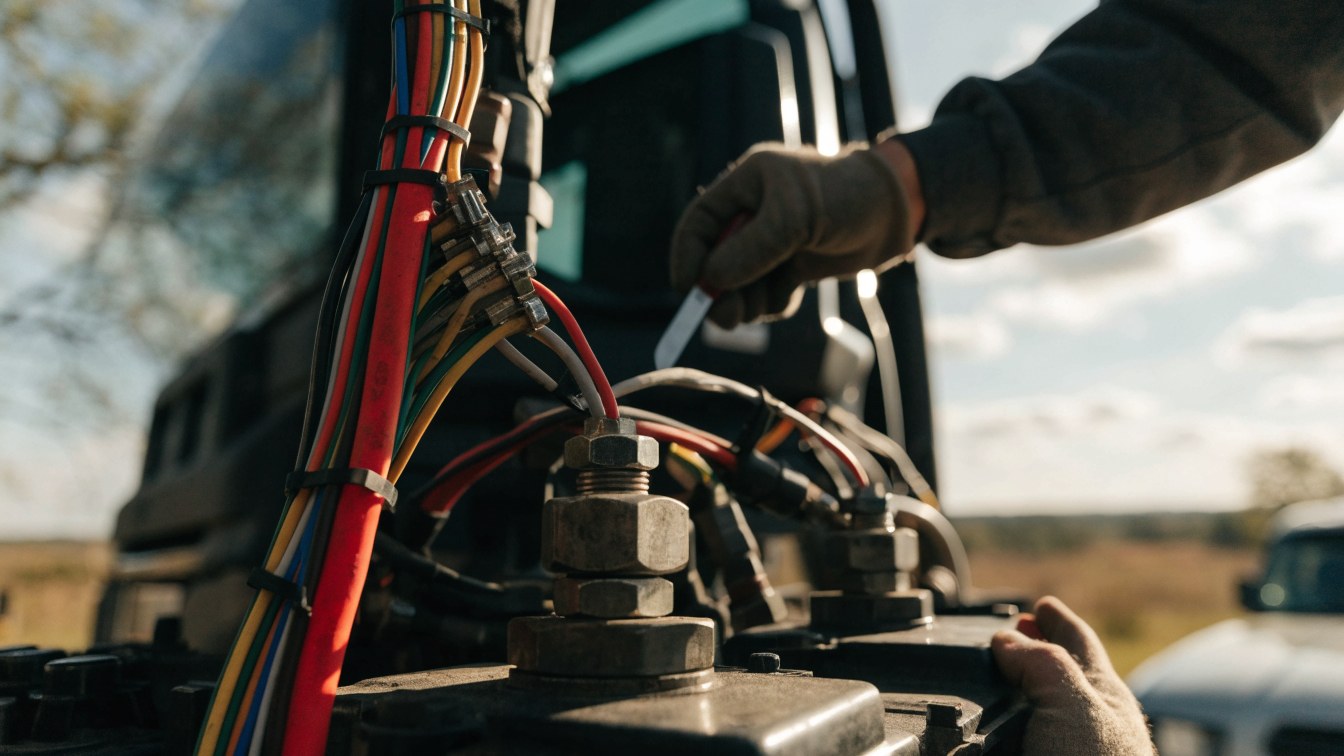
Weak batteries are one of the most common causes of a slow or failed start. The technician checks each battery's state of charge, tests how it holds a load, and inspects the terminals, cable ends and ground straps for corrosion or a loose connection. Cleaning and tightening a bad connection can restore a starting circuit that looked dead.
Where a battery has failed internally, or where the bank needs replacing, the technician discusses what is available at the roadside. Battery replacement is often a straightforward roadside job; the right group and capacity for the truck still have to be confirmed before the work goes ahead.
Alternators and starters
A charging warning, dimming lights at idle, or a battery that will not stay up points toward the alternator, its belt, or its wiring. The technician checks output voltage and current at the alternator, the condition of the drive belt and tensioner, and the condition of the charge cables and fusible links.
For a starter that clicks, spins freely without engaging, or drags under crank, the checks move to the starter itself, its solenoid and the cables feeding it. Starter and alternator replacement can often be completed at the truck when parts and access allow; the technician confirms what the diagnosis shows before committing to the repair.
The repair depends on what the diagnosis shows. The technician assesses the fault and the options available at the truck, then explains what can be done where it stands.
Wiring, lights and sensors
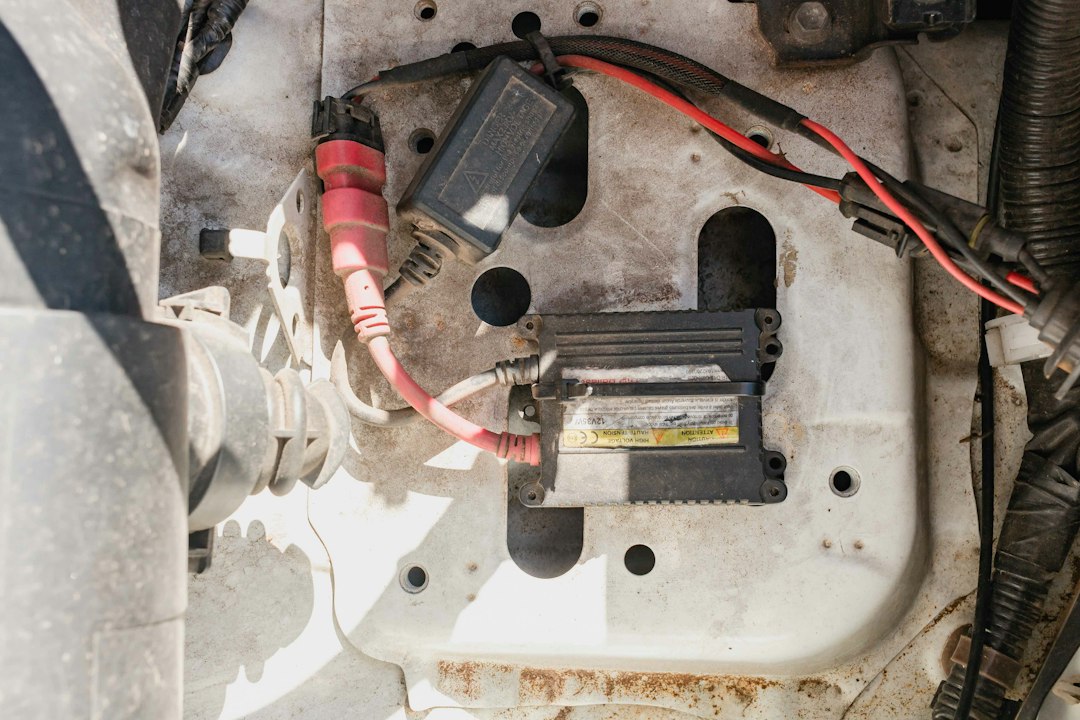
Electrical faults also travel through damaged wiring, poor grounds and failed sensors. The technician traces open circuits and chafed looms, checks the light circuits and their grounds, and reads sensor signals that feed the gauge cluster and the engine controller. A connector that has backed out or a ground that has corroded can stop an accessory, a light or a whole circuit from working.
Where the fault is a broken wire, a corroded ground or a failed sensor, the repair may be completed at the truck. Where the damage runs into a harness that cannot be safely repaired on site, the technician will say so plainly.
When a shop is needed
Some starting and charging faults are repairable at the truck. Others are not. The fault itself, the parts required, access to the component, and the conditions at the roadside all decide whether the work can be finished where the truck stands. Smiths Truck Service does not promise that every repair can be completed roadside.
When a repair needs a shop, the technician explains what the diagnosis showed and what the next step is, so the driver or fleet can plan from a clear picture rather than a guess. Discussing the truck's location and the starting or charging problem by phone is the fastest way to find out what may be possible.